The Jantar Mantar monument in Jaipur, Rajasthan is a collection of nineteen architectural astronomical instruments, built by the Rajput king Sawai Jai Singh II, and completed in 1734 century. It features the world's largest stone sundial, and is a UNESCO World Heritage site.
Scroll down for more.!
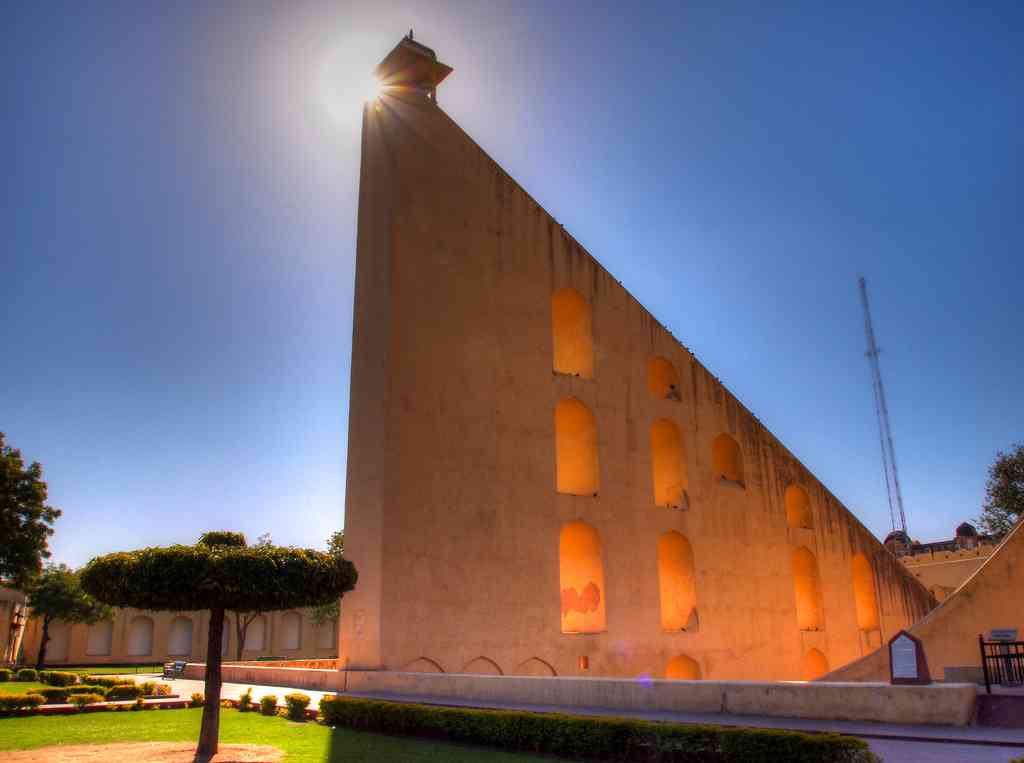
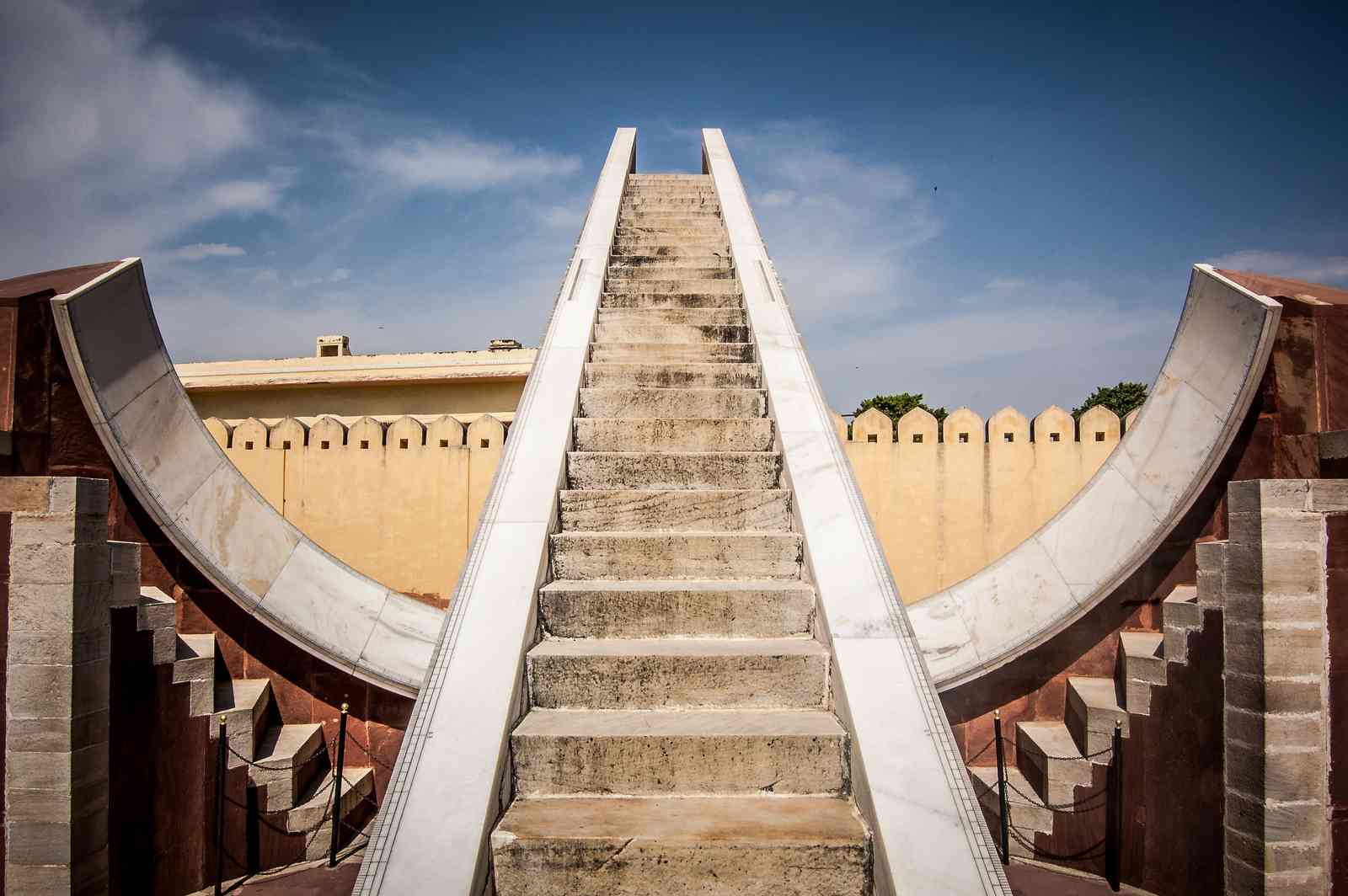
Jaipur Jantar Mantar is located near City Palace and Hawa Mahal of Jaipur, the monument features masonry, stone and brass instruments that were built using astronomy and instrument design principles of ancient Hindu Sanskrit texts.
One of the highlights of the Jaipur Jantar Mantar are the dozen precisely angled structures that each target a specific constellation. Most of these were restored in 1901 and have been well-maintained up to the present day.
The name is derived from jantar (yantra, Sanskrit: यनà¥à¤¤à¥à¤°, "instrument, machine"), and mantar (from mantrana, Sanskrit: मनà¥à¤¤à¥à¤°à¤£, "consult, calculate"). Therefore, Jantar Mantar literally means 'calculating instrument'. The instruments allow the observation of astronomical positions with the naked eye. The monument expresses architectural innovations, as well as the coming together of ideas from different religious and social beliefs in 18th-century India. The observatory is an example of the Ptolemaic positional astronomy which was shared by many civilizations.
The observatory consists of nineteen instruments for measuring time, predicting eclipses, tracking location of major stars as the earth orbits around the sun, ascertaining the declinations of planets, and determining the celestial altitudes and related ephemerides. The instruments are
Vrihat Samrat Yantra, The Supreme Instrument
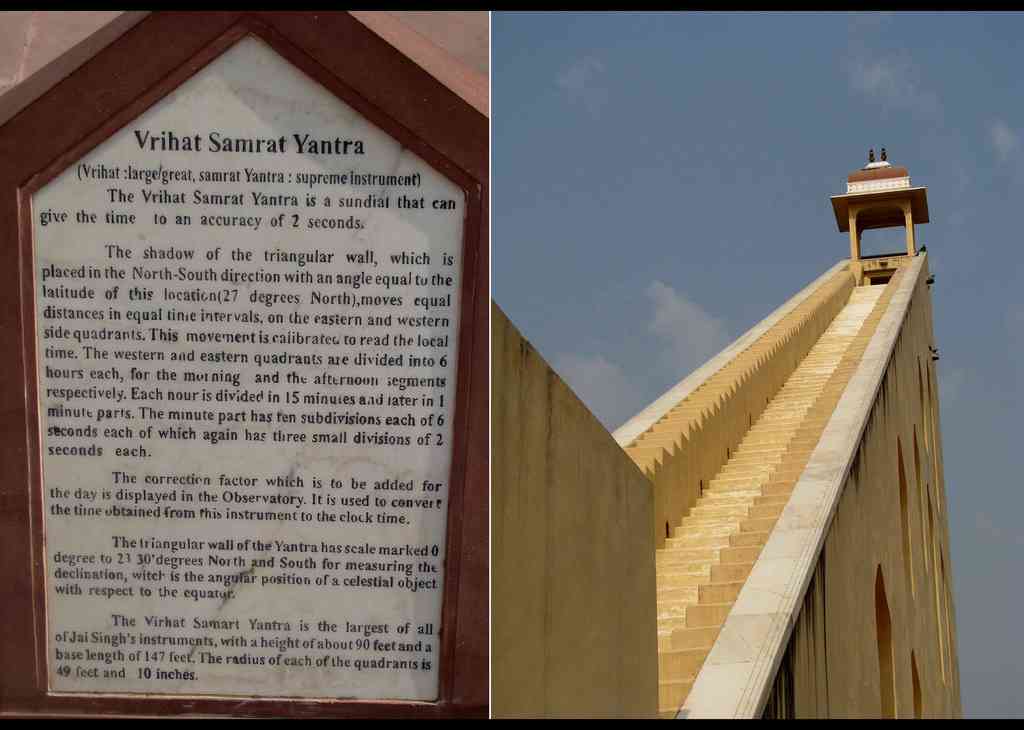
The most imposing of the Jaipur Jantar Mantar’s astronomical structures is the giant sundial known as the Samrat Yantra (The Supreme Instrument). A staircase rises 27 meters (88.5 ft) to a small cupola where notable readings were announced. With instruments of this type, size does matter: the Samrat Yantra is the world’s largest sundial and can tell the time with an accuracy of 2 seconds.
The measuring surfaces of the Samrat Yantra and other calculating instruments are faced with white marble and have incised notches used to note the path of the sun’s shadow. Observers can actually view the progress of the shadow, which moves at a rate of 1 mm 1/25 of an inch) per second, or 6 cm (2.4 inches) per minute.
Laghu Samrat Yantra
The small Sun dial or Laghu Samrat Yantra is the instrument used for time calculation. From one side wall is inclined at an angle of 27 which is equivalent to latitude of Jaipur. It is graduated to the scale of tangent, to find out the declination angle of the sun.
On each side of gnomon, there are two quadrants. The left for time in the morning and right for afternoon. Both the quadrants are divided by 6 hrs, 60 min. and each minute by 60 seconds. With the help of the shadow of the gnomon which falls on one of the quadrants, we find out the time of Jaipur.
You can watch the working of Samrat Yantra in this VIDEO by IndiaVideo.org
The unique impression of the Jantar Mantar results from the combination of modern mathematical precision with the rich patina of time. As such, the captivating angles and curves of the instruments appeal greatly to painters and photographers.
The Jantar Mantar is relatively unknown as ancient monumental works go, as are the significant accomplishments of India’s medieval astronomers. It is hoped that the preceding exploration will help change that… though only time will tell.
Tags
See Also
News

सुर्खियां