An inevitable part of Rajasthani culture, Mandana painting is also the oldest surviving form of tribal art.
Scroll down for more.!
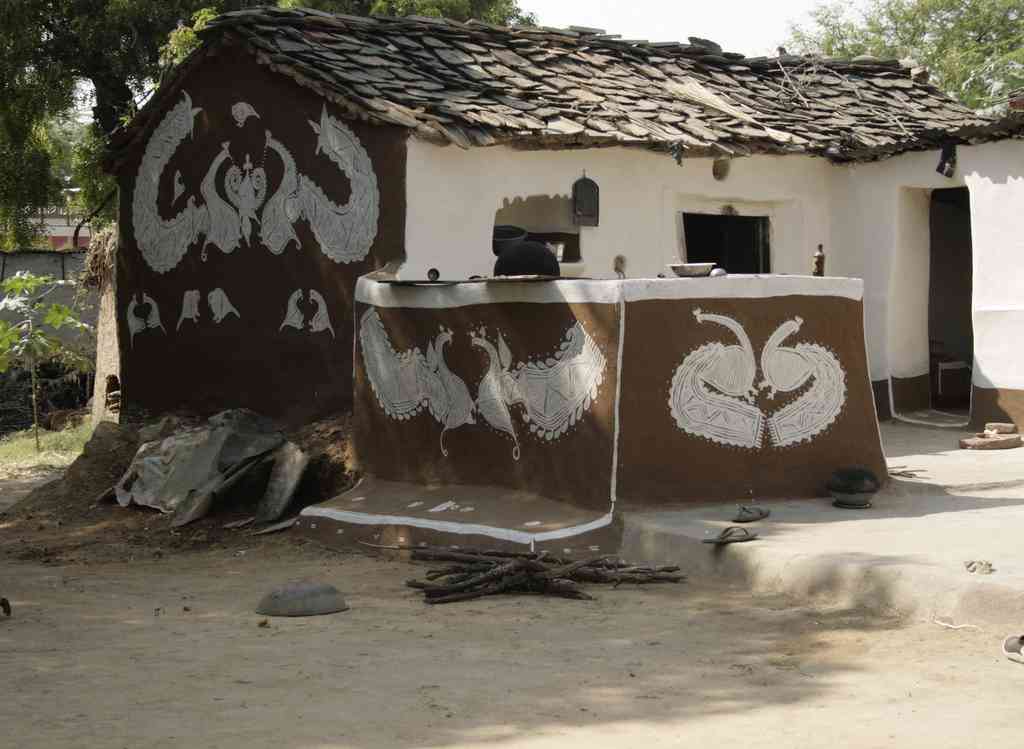
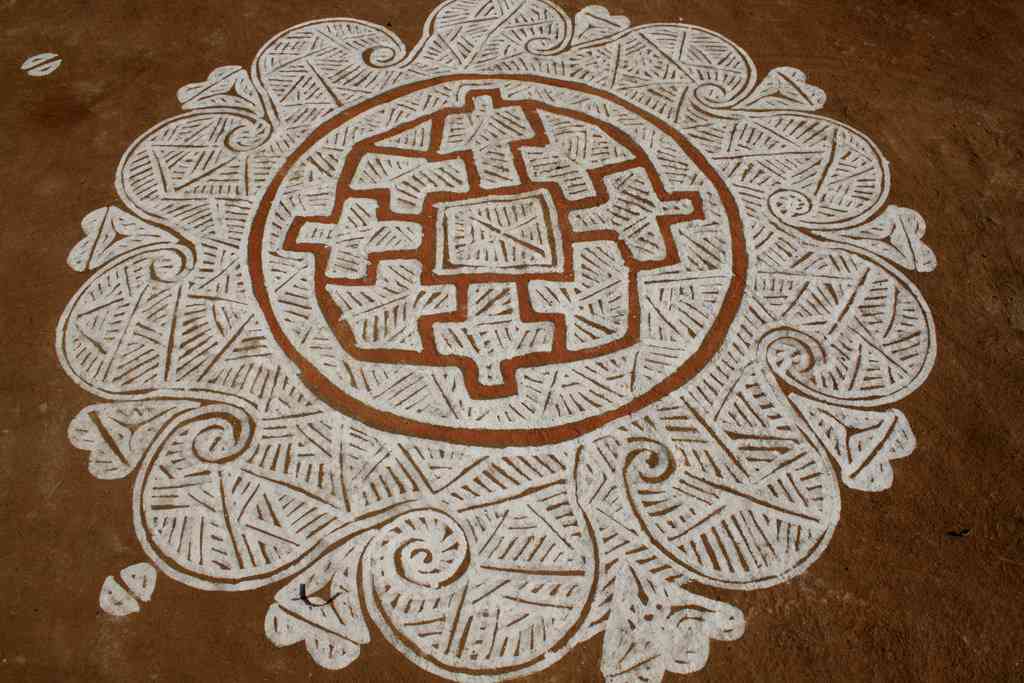


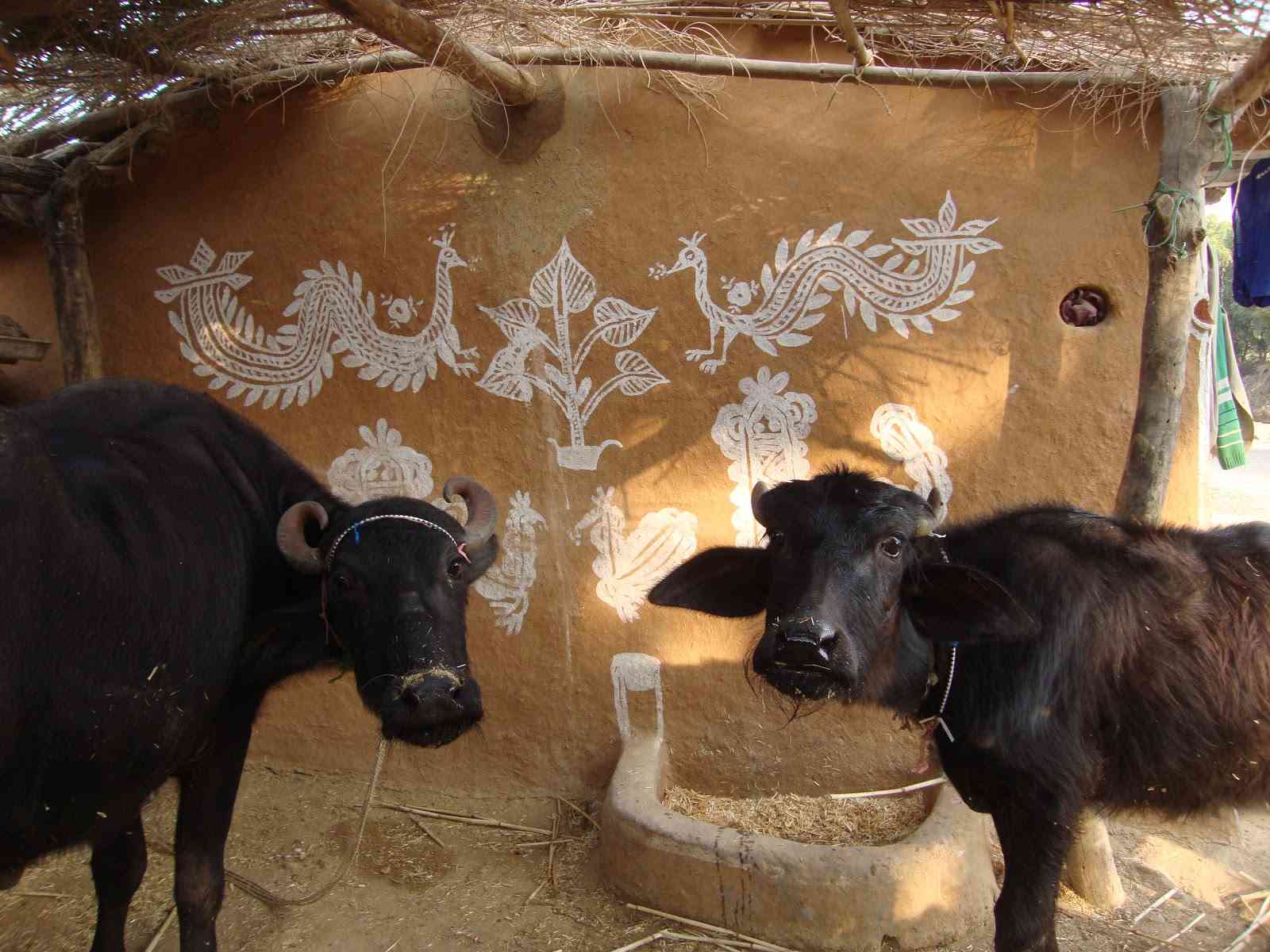
Mandana painting is the traditional Decorative Art of Rajasthan that has a primeval origin. Though no records are maintained, the shapes of the traditional art are proof enough of the fact that its inception was as old as the Vedic age of Indian subcontinent, i.e. 1500 to 500 BCE.
Though the art isn’t exclusive to Rajasthan, one feature of it is. In Rajasthan, Mandanas are drawn both on floors and walls, unlike the other states in India where the art is limited to the floors only. It is believed by some people that these Mandanas have powers to ward off evil and negative energies, while others trust that the traditional motifs of Mandana attract Divine blessings.
The etymology of the term Mandana is associated with the Gujjar Bhakha (the predecessor of Marwari language) word Mandana that literally means ‘to draw’. The origin of the word can also be linked to the term Mandan of the same language that means ‘to decorate or beautify’, after all the art is all about the decoration of the houses and Aangan (Communal floor).
Though the primary objective of making Mandanas is ornamentation, they have religious significance as well. Especially in the rural areas of Rajasthan, it is imperative to draw Mandana on all the special events, major festivals like Diwali, holi and auspicious occasions like marriage and birth alike.
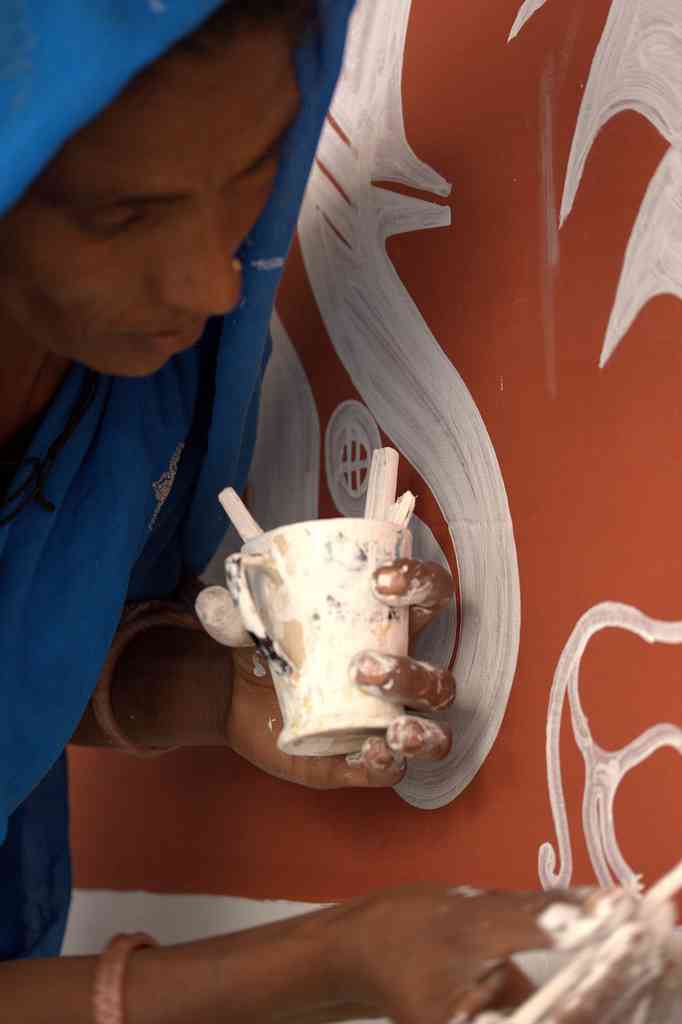
On these ceremonies, all the members (usually only the womenfolk) of the community or family get together, and excitedly draw Mandana paintings on the aforementioned canvases. For the purpose they use elementary tools like cotton swab (made with date twigs) or brushes (made of squirrel hair), white Khadiya (made of limestone), and red Geru (red ochre).
The paintings themselves are quite rudimentary yet fascinating. They do not have any complex patterns, but rather some predefined motifs that supposedly have greater vibes. The prominent designs of Mandana paintings include altars of vedic yagna, the vastu purasha mandalas, warli, and imagery of deities, and supposedly auspicious animals, birds (peacocks being most eminent), and plants.
Though all these tools and patterns may sound rather too simplistic to result in a awe-worthy art, one cannot stop self from appreciating the sheer elegance of a traditional Mandana after seeing it. Indeed, the simplicity of the paintings, if anything, increases the aesthetic appeal of the same, which is why even most esteemed fashion designers are adapting the art onto fabrics.
All in all, it can be deduced that this earthy art of Mandana making has managed to survive all these ages of art revolutions proving the truth of the saying “Simplicity is the ultimate sophistication”.
Tags
See Also
News

सुर्खियां